
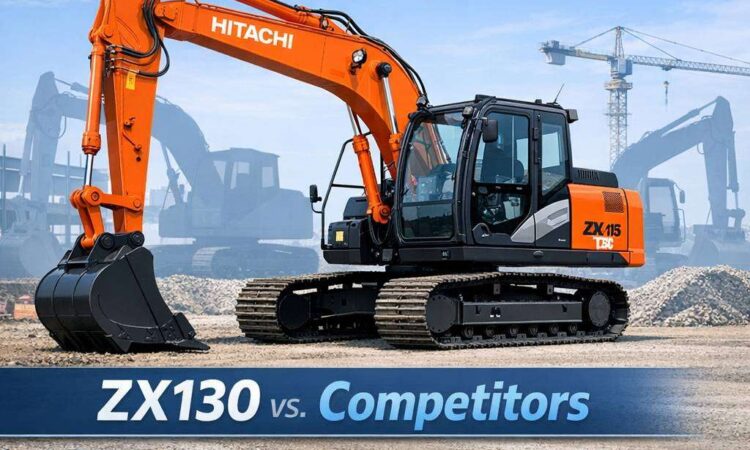
In the competitive landscape of hydraulic excavators, the Hitachi ZX130 remains a strong performer for a wide range of civil and construction projects. This article examines how the ZX130 compares with key rivals in 2026, focusing on performance, efficiency, operator comfort, maintenance, and total cost of ownership. We’ll reference real-world usage scenarios and practical considerations for buyers and operators who are weighing new purchases or looking for reliable used hitachi zx130 machines.
The Hitachi ZX130 is a versatile hydraulic excavator that delivers reliable performance on a variety of site conditions. Operators praise its smooth controls, efficient fuel consumption, and solid breakout force for trenching and loading tasks. For builders seeking dependable power and precise maneuverability, this model stands out in the mid-size class. https://steenent.com/hitachi-equipment/hitachi-zx130-6-utility-excavator/
Looking for reliable, versatile excavators for your site? The Hitachi ZX130 delivers impressive digging power, smooth operation, and fuel efficiency, making it ideal for mid-scale projects. It combines precision controls with robust performance, ensuring productive days on busy sites. hitachi zx130
Performance and digging capability
The Hitachi ZX130 sits squarely in the compact to mid-range segment, offering a balanced blend of breakout force, reach, and hydraulic responsiveness. The model typically features a hydraulic system designed for smooth, precise control, with multiple operating modes that suit different tasks—from trenching to light quarry work. When compared with rivals in its class, such as models from Komatsu, Caterpillar, and Volvo, the ZX130 often excels in controllability and fine-motor precision, which translates into reduced fuel use and cleaner trench lines on site.
For projects where reach and depth matter, the ZX130’s long dipper and efficient boom geometry help operators maintain productivity without sacrificing stability. In the used hitachi zx130 market, units with well-maintained hydraulics and reasonable service history can still perform on par with newer machines, provided they have up-to-date maintenance records and a solid hydraulic pump life.
Looking for power and reliability in heavy lifting? The hitachi zx130 combines efficiency with durability, delivering impressive performance on challenging sites. From precise digging to robust lifting capabilities, this machine keeps projects moving. For more choices and competitive rental options, visit https://www.sjhallplant.com today.
Fuel efficiency and operating costs
Fuel efficiency remains a critical consideration for fleet managers and operators. The ZX130 benefits from Hitachi’s engineering emphasis on efficient hydraulic flow and engine management. Modern iterations of the ZX130 are often equipped with economical travel pumps, load-sensing hydraulics, and auto-idle features that help minimise fuel burn during low-load periods. When placed side by side with equivalents from other manufacturers, the ZX130 frequently holds its own on fuel economy, especially in tasks that require precise control rather than brute hydraulic speed.
The total cost of ownership is more than fuel alone. Maintenance intervals, parts availability, and reliability drive long-term costs. Hitachi’s service network and commonality of wear parts with other Hitachi models can be advantageous for depots already operating Hitachi equipment. For buyers considering a used hitachi zx130, it’s essential to verify the condition of the undercarriage, hydraulic hoses, and the engine’s compression readings. A well-maintained used ZX130 can deliver comparable running costs to newer but less well-kept competitors.
Operator comfort and visibility
Operator comfort is a crucial factor in productivity, particularly on longer shifts. The ZX130’s cab is typically designed with good visibility, ergonomic controls, and reduced vibration to keep operator fatigue manageable. Modern updates in recent years emphasise seat support, intuitive joystick layouts, and sound attenuation. In practice, operators who switch from less refined machines often notice a tangible improvement in working conditions with the ZX130, which can translate into higher daily outputs and fewer breaks.
Compared to some rival models, the ZX130’s cab layout tends to favour straightforward, logic-led controls and solid all-round visibility. This is especially helpful in urban and congested-site environments where precise machine positioning matters. If you’re evaluating used hitachi zx130 machines, pay particular attention to the seat condition, control linkage wear, and the cab’s acoustic sealing, as these directly impact operator comfort.
Reliability, maintenance and parts availability
Reliability is a top consideration for buyers who want minimal downtime. Hitachi’s ZX130 is built with a robust hydraulic system, a durable engine, and components designed for easy access to service points. Routine maintenance—oil changes, filter replacements, track undercarriage checks, and hydraulic oil analysis—helps sustain performance. When comparing against competitors, downtime can hinge on support networks and the availability of genuine parts. Hitachi’s global service coverage and a well-established parts pipeline can be a differentiator for organisations operating across multiple sites.
For those purchasing a used hitachi zx130, a meticulous pre-purchase inspection is essential. Inspect the undercarriage for wear on track rollers and shoes, check the hydraulic accumulator and pump for signs of leaks, and review the engine’s cooling system for blockages or debris. A machine with a complete service history and recent major service work typically represents a lower risk than one with ambiguous or missing records.
Versatility, attachments and job profiles
One of the ZX130’s strengths is its versatility. The base machine can be fitted with a wide range of attachments, including shears, thumbs, breakers, and augers, enabling it to tackle trenching, sorting, light demolition, and site preparation without needing a different unit. When comparing to competitors, the attachment ecosystem and ease of switching tooling can influence its total value on a project. In major infrastructure or redevelopment schemes where multiple tasks occur, the ZX130’s adaptability can reduce the need for equipment swaps, saving time and transport costs.
In the used market, buyers should consider the availability of compatible attachments and whether the machine has already been prepared for quick-change couplings. A ZX130 with a well-documented attachment history can command a premium, but it often translates into faster project progress and predictable performance.
Purchasing considerations and selecting a model year
For 2026 buyers, decisions often come down to uptime, support, and total lifetime cost. If you’re purchasing new, assess the dealer’s aftercare, warranty terms, and the breadth of service coverage. If you’re considering used hitachi zx130 units, factor in age, reported hours, maintenance history, and current condition of critical systems such as the hydraulic, electrical, and cooling subsystems. A thorough inspection combined with a test run can reveal subtle issues not evident on paper.
When benchmarking against competitors, ask for a side-by-side comparison that includes fuel consumption per hour, expected maintenance intervals, parts lead times, and typical resale values. The ZX130’s strong resale market can be advantageous if you plan to upgrade in a few years, as long as you have maintained the machine correctly and kept comprehensive service records.
In summary, the Hitachi ZX130 remains a robust choice in 2026 for projects requiring balanced power, precise hydraulics, and reliable performance in a compact footprint. For organisations already invested in Hitachi ecosystems, the ZX130 can deliver compatible parts, consistent service support, and predictable operating costs, making it a sensible option whether you’re considering new or used hitachi zx130 units.