
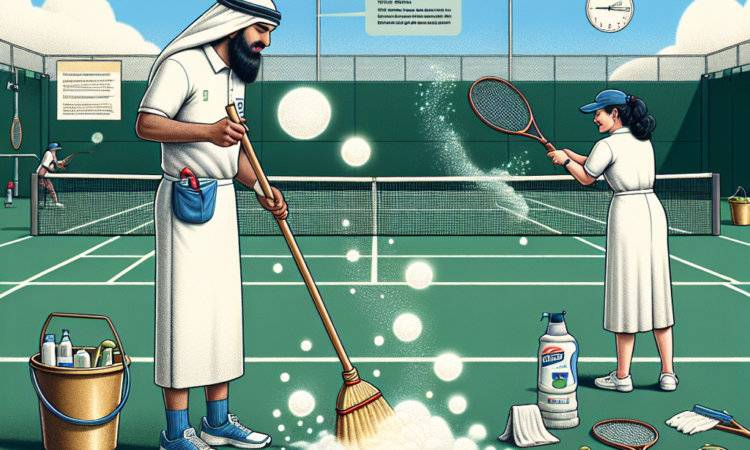
Are you a tennis court owner looking to keep your court in prime condition? Look no further! This comprehensive guide will provide you with all the information you need to ensure your tennis court stays clean and well-maintained. From tennis court repairs to artificial grass tennis court care, we’ve got you covered.
Maintaining a tennis court, whether it’s an artificial grass tennis court or a traditional hardcourt surface, requires regular maintenance to keep it in top shape. Proper tennis court cleaning is essential not only for esthetic reasons but also for the safety and longevity of the court. With the right techniques and tools, you can ensure that your tennis court remains a pristine and enjoyable playing surface for years to come.
The Importance of Tennis Court Cleaning
Regular tennis court cleaning is crucial for preserving the quality and durability of the surface. Dirt, debris, and moss can accumulate on the court, causing it to become slippery and unsafe for players. Additionally, neglecting to clean your tennis court can lead to costly repairs and resurfacing in the long run.
Tennis Court Maintenance Tips
Regular Cleaning Routine
Set up a regular cleaning schedule for your tennis court to prevent the build-up of dirt and grime. Sweep the court surface with a stiff brush or use a leaf blower to remove leaves, twigs, and other debris. For artificial grass tennis courts, use a specialised brush to brush away any surface dirt or leaves.
Deep Cleaning
For a thorough clean, consider power washing your tennis court surface. This will help remove stubborn stains, moss, and algae that may have accumulated over time. Be sure to use a suitable detergent and follow the manufacturer’s instructions to avoid damaging the surface.
For top-notch tennis court cleaning services, look no further than tennis court cleaning! Keep your court in pristine condition to maximise your game performance and enjoyment. Trust our experts to provide thorough maintenance and instilment services.
Moss and Algae Removal
If you notice moss or algae growth on your tennis court, it’s essential to address it promptly to prevent slip hazards. Use a mild bleach solution or a commercial moss and algae remover to kill and remove the moss. Scrub the affected areas gently with a brush and rinse thoroughly with water.
Frequently Asked Questions about Tennis
What are the basic rules of tennis?
The objective of tennis is to hit the ball over the nett and into your opponent’s court in a way that they cannot return it. Points are won when your opponent fails to return the ball within the boundaries or with success. A game is won when a player reaches four points, with a two-point lead over their opponent.
How many players are there in a tennis match?
A standard tennis match consists of either singles (one player against another) or doubles (two players on each side of the nett).
What equipment do I need to play tennis?
To play tennis, you will need a racquet, balls, appropriate clothing and shoes designed for playing on clay or hard courts.
How long does a typical game of tennis last?
The length of a game of tennis can vary depending on factors such as skill level, format (singles vs. doubles), and whether it is played as part of a tournament. A standard singles match at an amateur level usually lasts around 1-2 hours.
Are there different types of courts in tennis?
Yes, there are different types of surfaces used in professional tournaments including grass courts, clay courts and hard courts which can affect player styles and strategies.
Who are some famous professional tennis players?
Some well-known professional players include Roger Federer, Rafael Nadal, Novak Djokovic on the men’s side; Serena Williams, Naomi Osaka and Simona Halep on the women’s side.
How do scoring systems work in tennis?
Tennis uses unique scoring terminology such as "love" for zero and "deuce" when tied at 40-40. The first person to win four points wins games while sets must usually be won by two games difference.
Repairing Cracks and Damage
Regularly inspect your tennis court for any signs of cracks or damage. Small cracks can be repaired using a tennis court patching compound, while larger cracks may require professional tennis court repairs. Addressing these issues promptly will prevent further damage and extend the lifespan of your court.
Tennis Grass Court Maintenance
Artificial grass tennis courts require specific care to keep them looking and performing at their best. Follow these tips to maintain your artificial grass tennis court:
Brushing
Regularly brush your artificial grass tennis court to lift and redistribute the infill material. This helps prevent matting and ensures consistent playability across the court.
Infilled Debris Removal
Remove any debris, such as leaves, twigs, or dirt, that may accumulate on your artificial grass tennis court. Use a leaf blower or a rake to gently clear the surface without damaging the grass fibers.
Stain Removal
Treat any stains or spills on your artificial grass tennis court promptly to prevent permanent damage. Use a mild detergent and water to clean the affected area, then rinse thoroughly with water.
Conclusion
By following the tips and tricks outlined in this guide, you can keep your tennis court in pristine condition and extend its lifespan. Whether you have a traditional hardcourt surface or an artificial grass tennis court, regular maintenance is key to ensuring a safe and enjoyable playing experience for all. Don’t wait until it’s too late – start implementing these tennis court cleaning techniques today to keep your court in top shape.